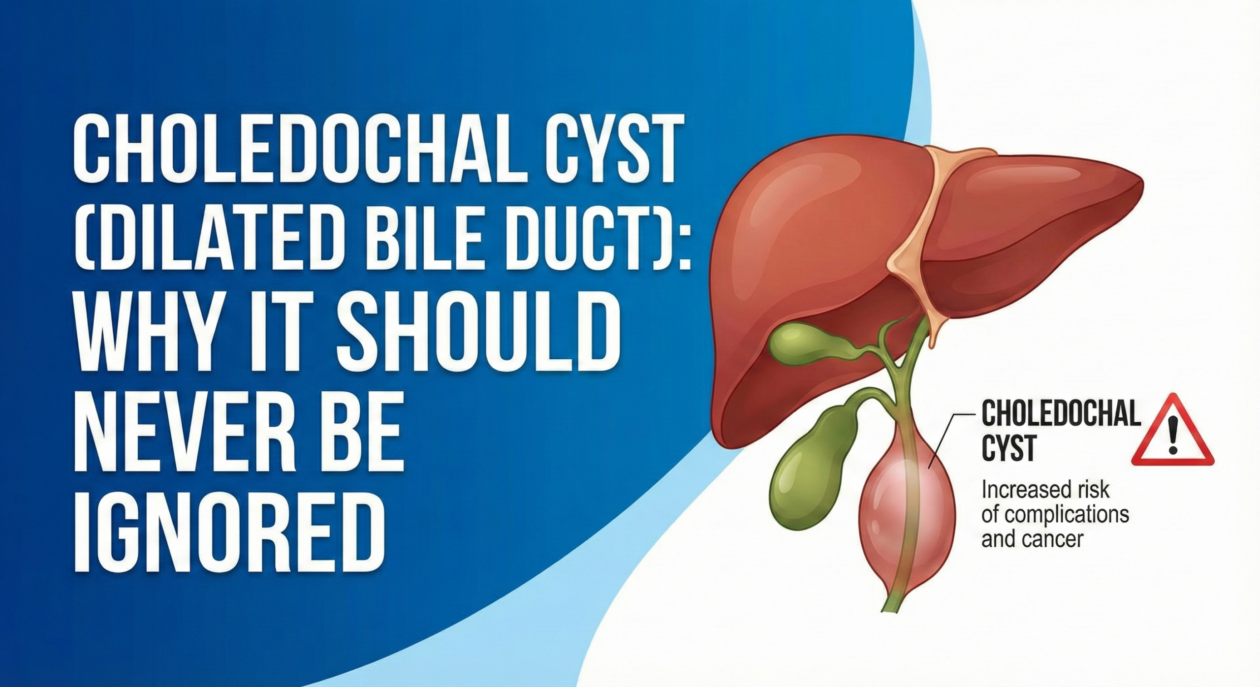
Most people have heard of gallstones or liver problems but choledochal cysts are far less known. Yet, this condition deserves serious attention because if left untreated, it can lead to persistent infections, liver damage, and even cancer later in life.
A choledochal cyst is an abnormal dilation (balloon-like swelling) of the common bile duct, the tube that carries bile from the liver to the small intestine. While often diagnosed in childhood, many cases remain silent until adulthood.
Why Does a Choledochal Cyst Occur?
The exact cause isn’t always clear, but the most accepted theory is an abnormal junction between the pancreatic duct and bile duct, allowing digestive enzymes to flow backward into the bile duct and weaken its wall.
This results in:
- Chronic inflammation
- Bile stasis (poor drainage)
- Gradual enlargement of the duct
Common Symptoms to Watch For?
Symptoms may be mild initially but worsen over time. People may experience:
✔️ Constant or intermittent upper abdominal pain
✔️ Jaundice (yellowing of eyes or skin)
✔️ Fever with chills (due to infection)
✔️ Nausea, vomiting
✔️ Recurrent pancreatitis
✔️ Repeated attacks of cholangitis (bile duct infection)
Some people have no symptoms until serious complications appear.
Complications if Left Untreated?
A choledochal cyst is not harmless. Over the years, it can lead to:
- Repeated infections (Recurrent Pyogenic Cholangitis)
- Gallstones or bile duct stones
- Cirrhosis and liver damage
- Acute pancreatitis
- Cholangitis requiring emergency hospitalization
- Bile duct cancer (Cholangiocarcinoma) — risk increases with age
Studies show up to 20–30% of untreated adults may eventually develop cancer.
How Is It Diagnosed?
Modern imaging helps detect and grade the condition:
🔹 Ultrasound
🔹 MRCP (Magnetic Resonance Cholangiopancreatography) – gold standard
🔹 CT Scan
🔹 ERCP (rarely now, more therapeutic)
What Is the Treatment?
Surgery is the definitive and recommended treatment.
The usual approach is:
🔧 Complete removal of the cyst
🔧 Reconstruction with a hepaticojejunostomy (joining bile duct to intestine for normal drainage)
Today, this can often be done using Minimally Invasive techniques such as Laparoscopic or Robotic Surgery, offering:
- Smaller incisions
- Faster recovery
- Less pain
- Lower infection risk
Early surgery significantly reduces long-term complications—including cancer risk.
Life After Surgery
Most patients go on to live normal, healthy lives. With regular follow-up, risk of future problems remains low.
Consult a Gastrointestinal and HPB Surgeon for proper assessment. Early diagnosis and treatment can prevent irreversible liver damage and eliminate future cancer risks.