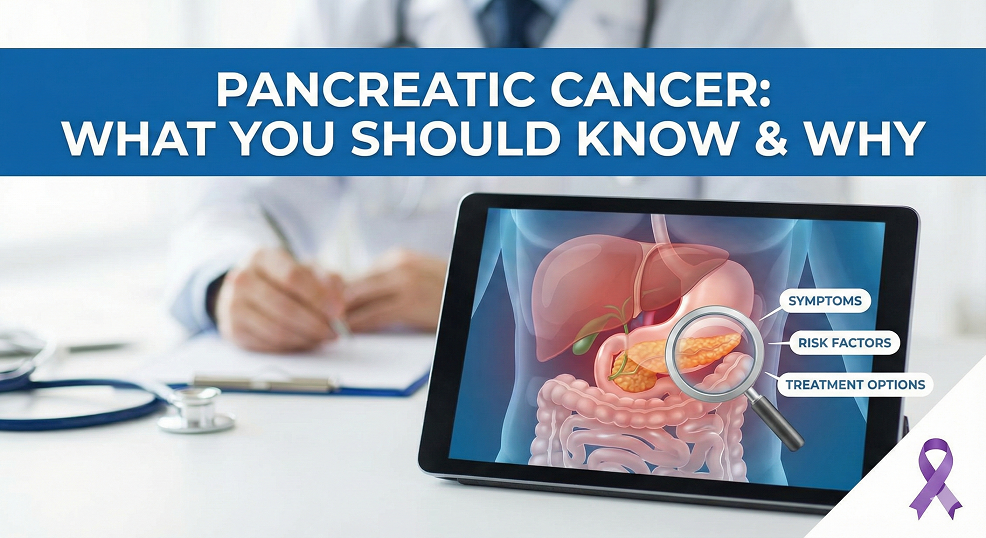
What Does the Pancreas Do?
The pancreas is a small organ deep inside the abdomen. It has two important jobs:
- Helps digest food using enzymes
- Controls blood sugar by producing insulin
Even though it’s small, the pancreas plays a big role in keeping the body healthy.
Pancreatic malignancy:
Pancreatic cancer is one of the most serious cancers. Many people have heard of cancers like breast, lung, or colon cancer but pancreatic cancer often stays in the background. One major reason is that it develops quietly, without obvious symptoms in the early stage.
Why Is Pancreatic Cancer Hard to Detect Early?
Pancreatic cancer is often called a “silent cancer” because symptoms usually appear only when the disease has already progressed. The pancreas lies deep inside the body, so lumps or tumors cannot be easily seen or felt.
Warning Signs You Should Not Ignore
- Persistent upper stomach or back pain
- Unexplained weight loss
- Loss of appetite
- Jaundice (yellowing of the skin or eyes)
- Dark urine and pale stools
- Nausea or vomiting
- Sudden diabetes in someone who never had it before
Who Is More at Risk?
Some people are at a higher risk of developing pancreatic cancer, such as:
- Smokers
- People with chronic pancreatitis
- Those with a family history of pancreatic cancer
- People with obesity or unhealthy lifestyle habits
- Individuals over the age of 50
- People with long-standing or newly diagnosed diabetes
How Is It Diagnosed?
- Blood tests
- Ultrasound, CT scan or MRI
- Endoscopic ultrasound (EUS)
- Biopsy
Treatment Options
Treatment depends on the stage of disease. It may include:
- Surgery (Pancreatico-duodenectomy/Whipple Surgery for pancreatic head cancer, Distal pancreatico-splenectomy for pancreatic body and tail malignancy)
- Chemotherapy
- Targeted therapy
Advances in laparoscopic and robotic surgery are making treatment safer and recovery faster for selected patients.
Is There Hope?
Yes. While pancreatic cancer is challenging, outcomes can be better when the disease is found early. Researchers are continuously improving treatments, screening methods, and personalized therapies.
Dr. Saha performed this Whipple surgery in more than 75 years old patients, currently who are disease free and doing well.