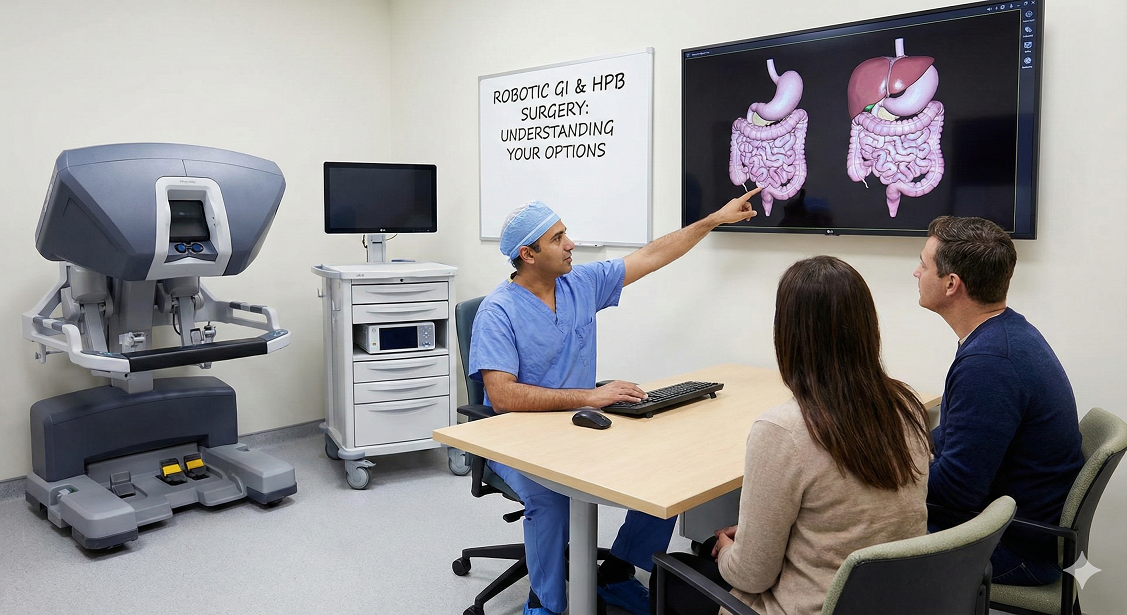
Modern medicine is evolving rapidly, and one of the most exciting advancements in surgical care is robotic-assisted surgery. In the field of Gastrointestinal (GI) and Hepato-Pancreato-Biliary (HPB) surgery, robotic platforms are transforming how major abdominal operations are performed offering greater precision, enhanced safety, and better recovery outcomes for patients.
What Is Robotic Surgery?
Robotic surgery is a form of minimally invasive surgery where we use advanced robotic systems—such as the Da Vinci XI Surgical Robot—to perform complex operations through tiny incisions.
Despite the name, the robot does not operate on its own.
The surgeon is always in complete control as the robotic arms act as highly precise extensions of the surgeon’s hands, translating every movement with incredible accuracy.
Why Is Robotic Surgery Used in GI & HPB Surgery?
GI and HPB procedures often involve delicate, deep-seated organs such as:
- Liver
- Pancreas
- Gallbladder and bile ducts
- Stomach
- Small and large intestine
- Esophagus
These structures require meticulous handling and fine dissection—areas where robotic surgery excels due to:
- 3D high-definition visualization
- Superior magnification (up to 10–15x)
- Instrument articulation mimicking the human wrist
- Greater stability and reduced tremor
Conditions Commonly Treated with Robotic Surgery
Robotic platforms are now being successfully used for:
🔹 HPB Procedures
- Robotic Whipple procedure
- Robotic liver resections
- Bile duct surgery and choledochal cyst excision
- Robotic cholecystectomy
🔹 GI Surgery
- Esophagectomy
- Gastrectomy for cancer
- Colorectal cancer surgery
- Hernia repairs
- Anti-reflux surgery (fundoplication)
- Surgery for Achalasia Cardia
Benefits of Robotic Surgery
Compared to open and even conventional laparoscopic surgery, robotic surgery may offer:
| Advantage | What It Means for Patients |
| Smaller incisions | Less pain, better cosmetic outcome |
| Reduced blood loss | Lower risk of transfusion |
| High precision | Safer handling of nerves, vessels, and ducts |
| Lower infection risk | Faster wound healing |
| Shorter hospital stay | Quicker return to normal life |
| Better postoperative function | Especially in colorectal and esophageal surgeries |
Many patients resume daily activities sooner and experience fewer long-term complications.