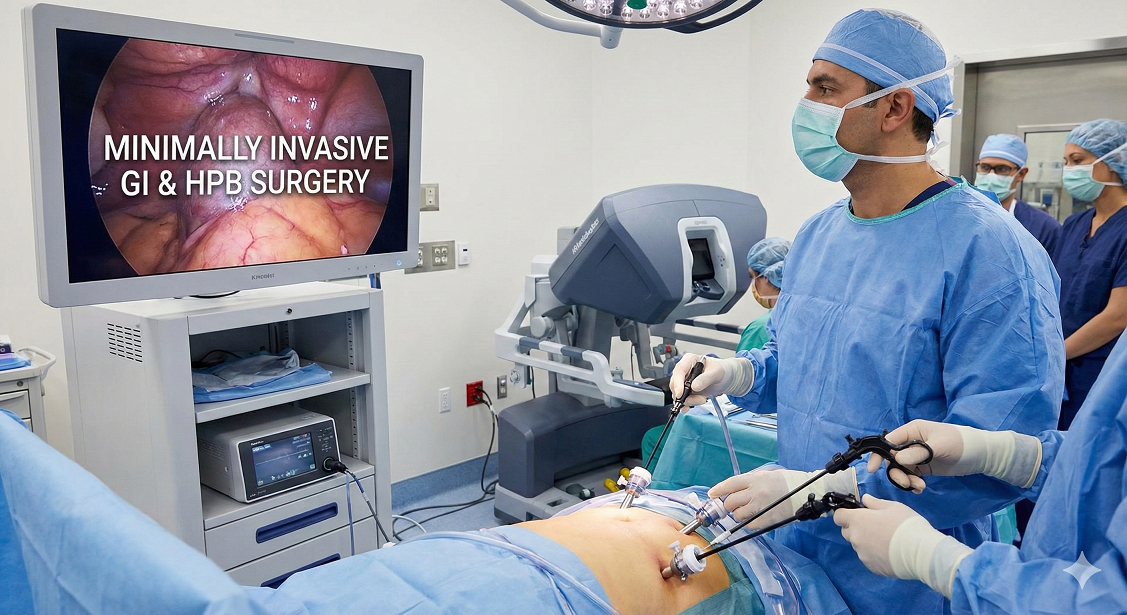
Minimally invasive surgery (MIS) has transformed the field of gastrointestinal (GI) and hepatopancreatobiliary (HPB) surgery. With techniques such as laparoscopic surgery, surgeons can perform complex procedures using small incisions, enhanced visualization, and improved precision—all while reducing physical trauma to the patient.
This approach is now widely used in surgeries involving the stomach, esophagus, liver, pancreas, gallbladder, bile ducts, intestine, and colon. As technology advances, minimally invasive surgery continues to reshape patient outcomes and recovery experiences.
What Makes Minimally Invasive Surgery Different?
Traditional open surgery requires larger incisions to access deep abdominal structures. In contrast, minimally invasive techniques use:
- Tiny incisions (usually 5–12 mm)
- A high-resolution camera (laparoscope)
- Specialized long instruments
These tools allow surgeons to operate with greater precision while minimizing tissue injury.
Where Is MIS Used in GI & HPB Surgery?
Minimally invasive approaches are now common in many procedures, including:
Upper GI Surgery
- Hiatal hernia and acid reflux surgery
- Laparoscopic Heller myotomy for achalasia
- Gastrectomy for cancer or benign disease
- Bariatric (weight-loss) procedures
Hepatobiliary Surgery
- Cholecystectomy (gallbladder removal)
- Common bile duct exploration
- Biliary reconstruction (e.g., hepaticojejunostomy)
- Liver resections for tumors or cysts
Pancreatic Surgery
- Distal pancreatectomy
- Pancreatic cyst surgery
- Pancreaticoduodenectomy (Whipple)
Colorectal & Small Bowel Surgery
- Right and left hemicolectomy
- Low anterior resection and colorectal cancer surgery
- Inflammatory bowel disease procedures
- Small bowel resections
Hernia & Abdominal Wall Repair
- Inguinal, ventral, and incisional hernias
- Diaphragmatic and internal hernia correction
Benefits of Minimally Invasive Surgery
Patients undergoing MIS often experience:
- Less postoperative pain
- Reduced blood loss
- Lower risk of wound infections
- Shorter hospital stay
- Faster return to normal daily activities
- Minimal scarring for improved cosmetic results
- Better precision and visualization (especially with robotic technology)
For cancer patients, these advantages mean earlier recovery and smoother transition to additional treatments if needed.