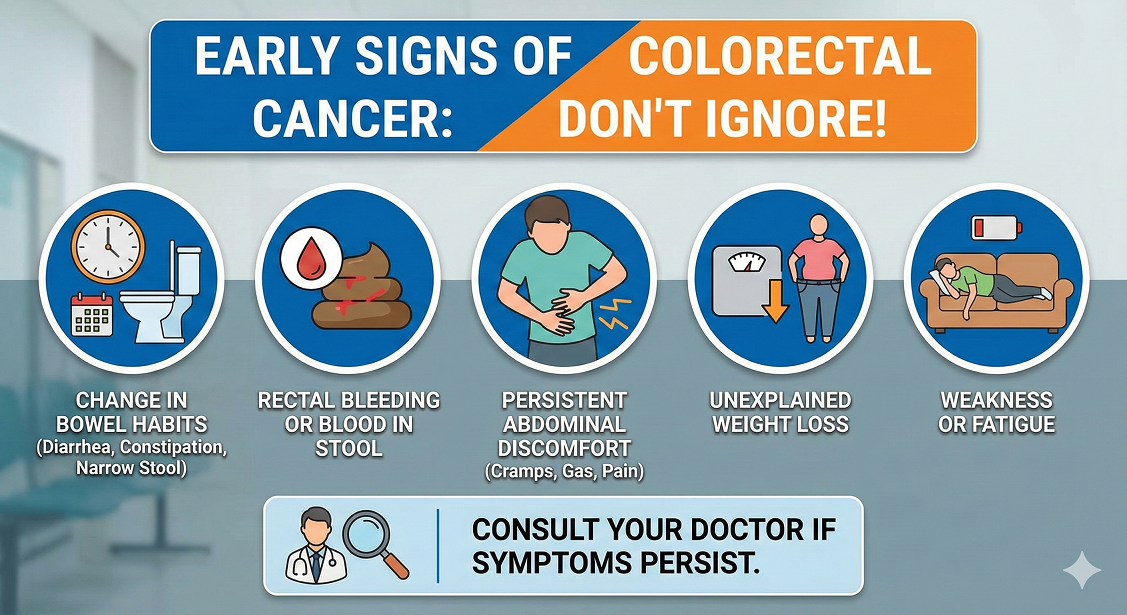
Colorectal cancer—cancer of the colon or rectum—is one of the most common cancers worldwide, yet it is also one of the most preventable and treatable when detected early. Because early colorectal cancer may not always cause obvious symptoms, many people overlook warning signs or assume they are caused by harmless conditions like piles (hemorrhoids), indigestion, or aging.
Recognizing early symptoms and seeking timely medical evaluation can make a life-saving difference.
Why Early Detection Matters
Colorectal cancer often develops slowly from precancerous growths called polyps. Detecting these changes early allows treatment before the disease spreads. When diagnosed at an early stage, survival rates are high, and treatment may be less invasive.
This makes awareness—and timely screening—crucial.
Warning Signs You Shouldn’t Ignore
1. Changes in Bowel Habits
- Diarrhea or constipation
- Narrow or ribbon-shaped stools
- Feeling of incomplete bowel evacuation
2. Blood in the Stool
Bleeding may appear as:
- Bright red blood
- Dark or maroon stool
- Black, tarry stool (suggesting internal bleeding)
3. Unexplained Weight Loss
Sudden weight loss without dieting or increased physical activity can be a sign of underlying disease, including cancer.
4. Abdominal Pain or Cramping
Frequent abdominal discomfort—such as cramping, bloating, or gas pains—especially when combined with bowel habit changes may indicate colorectal issues.
5. Fatigue and Weakness
Chronic fatigue may occur because colorectal cancer can cause slow internal bleeding, leading to iron deficiency anemia.
6. Feeling the Urge to Pass Stool Even After Bowel Movements
This sensation, known as tenesmus, may occur if a tumor is obstructing the lower colon or rectum.
Who Is at Higher Risk?
Risk increases with:
- Age over 45 years
- Family history of colorectal cancer or polyps
- Diet high in red or processed meat
- Obesity or sedentary lifestyle
- Long-standing inflammatory bowel disease (ulcerative colitis)
Screening Saves Lives
Screening tests—such as colonoscopy, stool tests, or flexible sigmoidoscopy—help detect precancerous polyps and early cancers before symptoms develop.
Doctors generally recommend starting screening at:
- Age 45 for average-risk individuals
- Positive Family History